Managing Vendor Access: How to Streamline Entry for Maids, Milkmen, and Deliveries
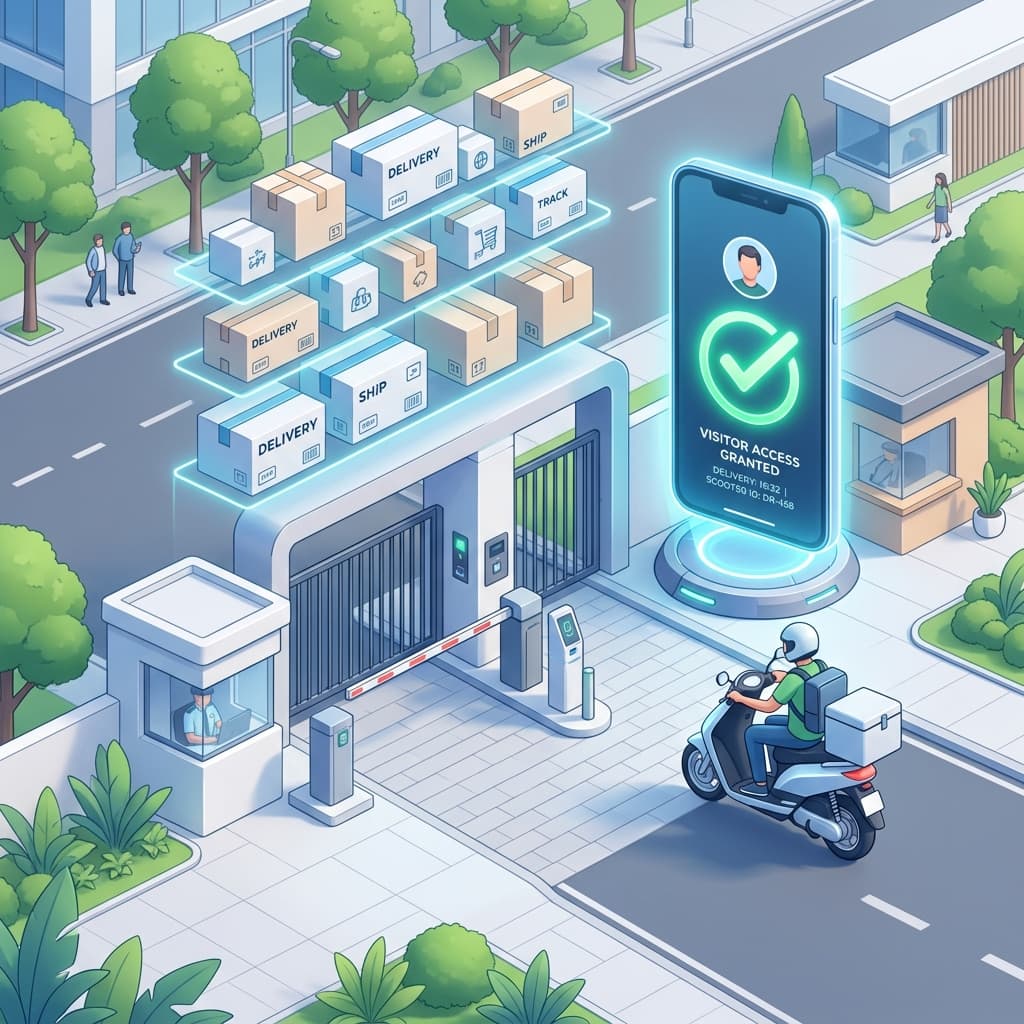
The Daily Vendor Chaos at the Gate
When Resident Welfare Associations (RWAs) design their security protocols, they often focus heavily on managing the occasional guest or the unexpected walk-in visitor. However, a quick analysis of the logbook at any urban housing society will reveal a completely different reality: the occasional guest is the exception. The overwhelming majority of gate traffic—often upwards of 80%—is comprised of daily staff and gig-economy workers.
We are talking about maids, cooks, milkmen, newspaper delivery boys, car cleaners, plumbers, and a never-ending stream of Swiggy, Zomato, Amazon, and Blinkit delivery executives.
Managing this massive, constant flow of transactional visitors using manual processes leads to chaos. It creates massive morning queues at the main gate, frustrates the hard-working staff trying to earn a living, and frequently wakes up residents with unnecessary intercom verification calls.
The Flaw in Blanket Security Protocols
The root of the problem lies in applying a "blanket" security protocol to every single person who approaches the gate. If your security guard is instructed to stop, question, log, and intercom-verify a Swiggy delivery driver exactly the same way they verify an unknown salesperson, the system will break down under volume.
The Morning Intercom Nightmare
Consider the daily routine of a domestic helper. A maid who works in five different flats arrives at the society gate at 7:00 AM. In a traditional setup, the guard must intercom Flat 402 to verify if they are expecting the maid. The resident, trying to sleep before work, is awoken by the ringing phone. The guard then has to call Flat 501, Flat 603, and so on.
If a resident misses the call, the maid is forced to wait outside, losing precious working time and delaying the schedule for every other flat she serves. This is a profound failure of process design. You are failing both the resident you are trying to protect and the worker you rely upon.
The Solution: Categorization and Role-Based Access
A modern society needs to categorize its visitors and apply different levels of "security friction" to each category based on risk and frequency. This is impossible with a paper register but incredibly simple with a digital platform like NandiG.
By utilizing NandiG's dynamic access control system, societies can streamline entry for authorized personnel while actually tightening the overall security perimeter. Here is how to categorize and manage the three main types of vendor traffic.
Category 1: Long-Term Daily Staff (Maids, Cooks, Drivers)
These individuals are known, trusted, and visit the society every single day, often for years. Applying daily friction to their entry makes no sense.
Implementing Duration-Based QR Passes
Using the NandiG app, a resident can add their domestic helper to their digital profile and issue a Duration QR Pass. This pass can be set to be valid for 6 months or 1 year. The pass is generated as a unique QR code on the resident's phone, which they can share via WhatsApp with the maid, or the RWA can print it onto a physical plastic ID badge for the staff member to wear.
When the maid arrives at 7:00 AM, she bypasses the queue and simply flashes her digital or physical QR code at the guard's mobile scanner. The NandiG system instantly verifies the pass against the active database.
- The guard's screen flashes green, showing the maid's photo and the flat she is authorized to visit.
- No intercom call is made.
- The exact entry time is logged silently in the cloud database.
- The resident receives a silent push notification: "Your maid Lakshmi has entered the premises."
If the resident terminates the employment of the maid, they simply open the NandiG app and tap "Revoke Pass." The QR code is instantly deactivated. If the former maid tries to enter the next day, the scanner flashes red, and entry is denied.
Category 2: Gig-Economy Workers (Food and eCommerce Delivery)
Delivery executives are transactional visitors. They are only authorized to be on the premises for a very short duration (usually under 15 minutes to drop off a package).
Pre-Approval and Digital Logging
The friction here should be minimal but heavily tracked. Residents expecting a food delivery can use the NandiG app to generate a "Quick Entry" pre-approval. They tap the Swiggy/Zomato icon, and the system alerts the main gate that a delivery is expected for Flat 402 in the next 30 minutes.
When the executive arrives, the guard sees the pre-approved request on their tablet. They select it, optionally snap a quick photo of the package or the driver, and hit "Allow Entry." Again, no intercom call is required, saving time for the driver who is rushing to meet a delivery SLA.
Crucially, NandiG tracks the dwell time of these transactional visitors. If a delivery executive has not checked out of the society after 45 minutes, the system raises a flag on the guard's dashboard, prompting them to investigate.
Category 3: Society Maintenance Staff (Plumbers, Electricians, Sweepers)
Unlike a maid who visits a specific flat, society maintenance staff need dynamic access to multiple blocks, basements, and utility rooms. They are employed by the RWA, not individual residents.
Staff Role Assignment and Attendance Tracking
In the NandiG system, the Secretary can assign specific Staff Roles to these individuals. They are issued a digital Staff ID.
When the plumber arrives for their shift, scanning their ID at the gate functions as an automated attendance system. The RWA committee can pull monthly reports detailing exactly how many hours the contracted cleaning agency staff actually spent on the premises, ensuring the society is getting exactly what it pays for.
Conclusion: Frictionless Security
Security and convenience are often viewed as a zero-sum game: to get more of one, you must sacrifice the other. By leveraging modern categorization and digital passes, NandiG proves this assumption wrong.
By giving trusted daily helpers frictionless entry, you remove the morning bottlenecks. By pre-approving deliveries, you eliminate annoying intercom calls. This frees up your security guards' time and cognitive load, allowing them to focus their attention on the 5% of visitors who actually pose a potential security risk: the unknown, unverified walk-ins.
Upgrade your gate management, treat your daily vendors with the efficiency they deserve, and reclaim your residents' peace of mind.